
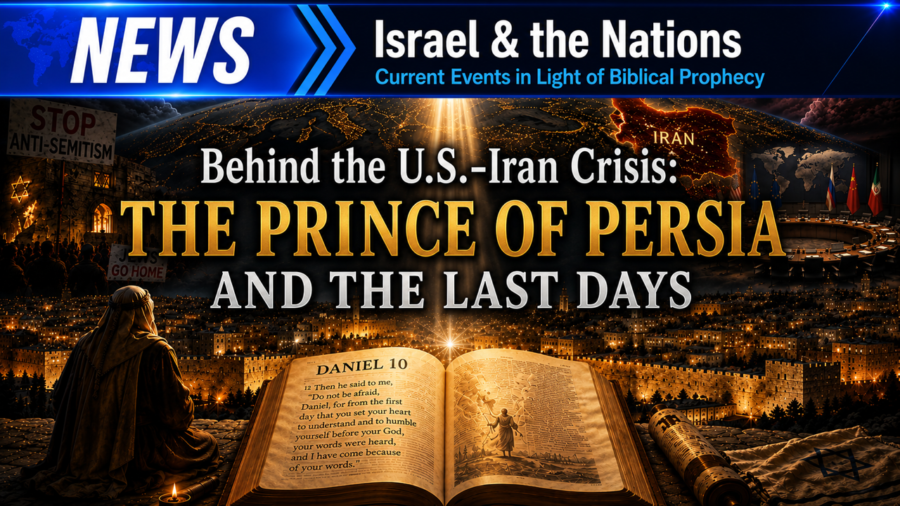
 As we move forward in time, the news seems increasingly bizarre. This month of June may well go down in history as a month of contradictions, a time when two parties are engaged in negotiations while constantly issuing opposing statements. I am referring to the striking pattern that has emerged in recent mediation between the United States and Iran, where both sides have repeatedly contradicted one another.
One side says, “There is an agreement.” The other responds, “No agreement has been reached.” Consider just a few examples. As early as April and May of this year, the United States said direct negotiations were underway, while Iran insisted the talks were only indirect. By mid-June, U.S. officials said a deal was ready to be signed immediately, while Iran maintained that no final agreement existed.
Then, the United States claimed that Iran had requested the talks; Iran rejected that account. The U.S. cited major Iranian concessions, while Iran said the discussions were focused solely on sanctions relief. Then, President Trump said that Iran had agreed to nuclear inspections “into infinity.” Iran, however, responded that there were no such plans for inspections.
Furthermore, while the United States stated that the Strait of Hormuz is open and free for international navigation, with no transit fees, Iran indicated that it intends to impose transit charges. And then, not long after, they are shooting at each other.
What lies behind these contradictions? Or, more precisely, who is behind them? Bible prophecy reveals that when nations rise against one another, there is often more at play than meets the eye. The Scriptures speak of spiritual forces at work behind the affairs of nations.
One of the clearest passages appears in the Book of Daniel, where the prophet specifically mentions the country we know today as Iran by its ancient name, Persia. The country officially retained the name Persia until the early 1930s. The prophecy we are about to consider speaks directly of “the latter days,” the period leading up to the return of the Messiah. Considering this prophecy may shed light on the confusion, distrust, and hatred hovering over the Middle East.
We recall that in Daniel 9, the prophet receives one of the greatest Messianic prophecies in all of Scripture: the precise timing of the Messiah’s coming and His death for the sins of Israel and the world. Then, in chapter 10, an angel appears to Daniel and says, “Now I have come to give you an understanding of what will happen to your people in the latter days, for the vision pertains to days yet future.” (Daniel 10:14)
The Hebrew expression אַחֲרִית הַיָּמִים (aḥarit ha-yamim), “the latter days,” often refers to the period immediately preceding the establishment of the Messiah’s Kingdom, as in passages such as Ezekiel 38–39, which depict the war of Gog and Magog. But as Daniel is overwhelmed by the vision and the presence of this heavenly messenger, the angel reveals something astonishing, “Do you understand why I came to you? But I shall now return to fight against the prince of Persia; so I am going forth, and behold, the prince of Javan is about to come.” Daniel 10:20
At this moment, the curtain is drawn back, and we are given a glimpse into another dimension, the unseen spiritual realm. Daniel is allowed to see that while rulers on earth are preparing for conflict, a parallel struggle is unfolding in the heavenly realm. Could this also help us understand the confusion, contradictions, and instability that characterize our own times?
Notice the two figures mentioned: the Prince of Persia and the Prince of Yavan. Who are they? The Hebrew word translated as prince is שַׂר (sar), meaning ruler, commander, or chief authority. It was often used to refer to military leaders; however, it also refers to powerful spiritual beings that operate behind earthly kingdoms.
The first is Persia, like Israel, a country easily recognizable throughout history. Today it stands as a major opponent of Israel and the Western world, as many Bible prophets predicted. The second is the Prince of Yavan. While Javan is often translated as Greece, it represents far more than the geographical nation of Greece. Yavan refers to the Hellenistic civilization, whose influence spread throughout the world and profoundly shaped Western thought.
Is it not remarkable that this prophecy specifically mentions two powers, Persia and Yavan? Today, we witness tensions between Iran and the Western world, particularly the United States and its allies. Daniel 10 reminds us that behind the visible conflicts among nations lies an invisible spiritual conflict. If we continue to follow Daniel’s prophetic chronology, the next major figure to emerge on the world stage is the one commonly called the Antichrist, followed ultimately by the glorious Second Coming of the Messiah. The message of Daniel is clear: history is not out of control. Behind the rise and fall of empires stands the sovereign God, who directs history toward the day when the Messiah Himself will return and establish His everlasting Kingdom.
And speaking of bizarre exchanges between nations, another area of our world is becoming even more irrational: antisemitism. Here are a few examples that illustrate how illogical and unreasonable it is becoming. On June 16, during the FIFA World Cup, Algeria faced Argentina, the team of the famous Lionel Messi. Messi scored all three goals as Algeria lost 3–0. However, at one point in the game, when the referee made a decision in Argentina’s favor, an Algerian sports analyst reportedly said, “Messi is protected by the Jewish lobby. This lobby controls the world; they run it however they want, as if they were the mafia. [FIFA President] Infantino doesn’t want us to do well.” So now, apparently, the Jews are not only being blamed for politics, banks, wars, and the weather, but they are also responsible for Algeria losing a soccer game.
Listen to another example. This past week, Colombia’s outgoing president, Gustavo Petro, claimed that Israel had interfered in its presidential elections. As if Israel had nothing else to do but go to Colombia and manipulate its elections. By the way, have you noticed the extraordinary power that antisemites ascribe to the Jewish people? Even Jewish people themselves are often astonished by such accusations. Yet this illustrates how irrational and illogical antisemitism can be.
One final example, and this one comes from here in Canada. On June 1, 2026, Prime Minister Carney delivered a speech at a synagogue condemning antisemitism and announced the creation of a committee to combat it. That is certainly commendable and encouraging. However, consider who was appointed to serve on this committee. Among its members is former Canadian Minister of Transport Omar Alghabra, who many consider a virulent antisemite. Critics have pointed to a number of his past statements regarding Hamas and Hezbollah and have questioned whether his views are compatible with the committee’s mission to combat antisemitism. This illustrates how confusing and contradictory our world has become.
But for believers, these developments also remind us that history is moving toward its appointed end. As we watch these events unfold week after week, we are reminded that the Lord’s return draws ever nearer. Indeed, it sometimes seems as though we can already hear the distant sound of the shofar calling God’s people home
Click here for the Video: Israel and the Nations – Behind the U.S.-Iran Crisis: The Prince of Persia and the Last Days