
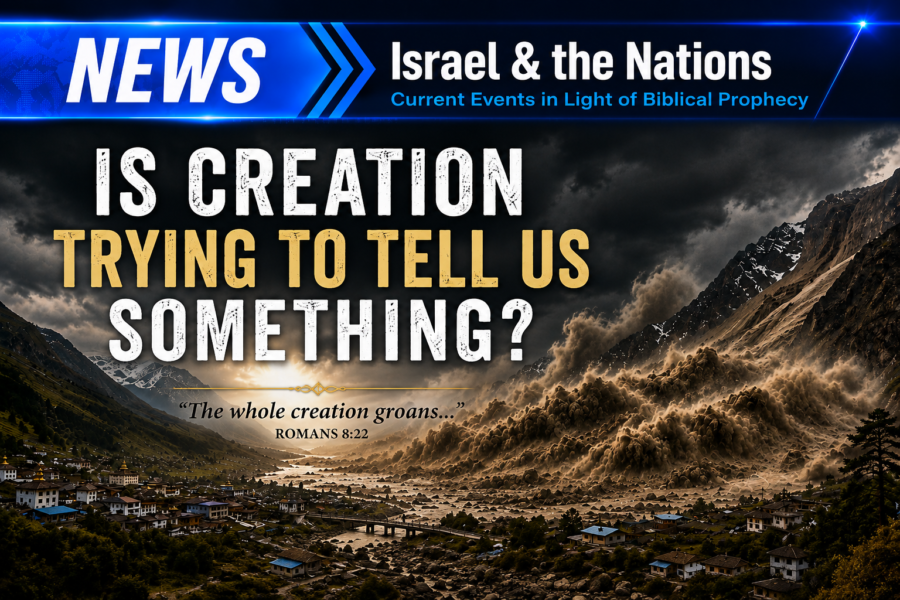
 Let us consider for a moment the drastic changes in weather and the devastation we are witnessing around the world, especially what occurred last week on the Nepal-Tibet border. For those of us watching from the safety of our homes, it is images on a television screen. But imagine being there. Imagine sitting quietly when suddenly you hear a deep, terrifying roar in the distance, almost like a freight train coming toward you. Within moments, an enormous wall of water, mud, rocks, and debris comes tearing through the valley, sweeping away almost everything in its path.
That nightmare became reality on August 26, when a massive flash flood and mudslide killed hundreds of people. Today, thousands of others are reported missing, including tourists. Our world can change in a matter of minutes.
As we look back on this summer, we have witnessed scenes like these with disturbing frequency: extraordinary rainfall, flash floods, typhoons, devastating heat, drought, and wildfires. Alongside them, powerful earthquakes have shaken different parts of the world. Japan has experienced what authorities called unprecedented rainfall. Parts of Europe have endured extreme heat, drought, and wildfires. Large areas of France have faced water restrictions. Across Asia, violent storms and torrential rains have forced enormous numbers of people from their homes. And then there are the earthquakes, reminding us how quickly even what appears solid beneath our feet can begin to shake.
So how should we, as believers, view these things? We cannot point to every flood, hurricane, drought, or earthquake and declare, “This particular disaster is the judgment of God.” But neither should we ignore the fact that throughout Scripture, God repeatedly used disturbances in creation to awaken people, warn them, and call them back to Himself.
In 1 Samuel 12, Samuel told Israel, “Stand still and see this great thing which the LORD will do before your eyes.” Suddenly, during the wheat harvest, the Lord sent thunder and rain. The weather itself became a message. The people feared the Lord and recognized their sin. Wouldn’t it be wonderful if what we are witnessing today prompted people to do the same? To stop. To look upward. And to ask, “What is happening to our world?”
Then, in Amos 4, God reminded Israel, “I withheld the rain from you…”. Rain fell on one city while it was withheld from another. After describing calamity after calamity, God repeatedly says, “Yet you have not returned to Me.” That was the tragedy. They experienced the warnings yet still did not return to God. This becomes especially significant when we come to the New Testament. Yeshua warned in Matthew 24:7–8, “Nation will rise against nation, and kingdom against kingdom, and in various places there will be famines and earthquakes. But all these things are merely the beginning of birth pangs.”
Interestingly, the Greek word translated “earthquake” is seismos (σεισμός). Its basic idea is a shaking, a violent agitation, a disturbance. In Matthew 8:24, the same word describes the violent disturbance of the sea as the disciples’ boat was being overwhelmed by the waves. But notice Yeshua’s illustration: Birth pangs, and as the time approaches, the contractions intensify.
When we consider these disturbances alongside the other signs we have been examining, including the nations increasingly aligning themselves, biblical values rapidly disappearing, and antisemitism continuing to rise, surely this should command our attention.
Perhaps the greatest question is not “Is the weather changing?” Or even “Why are these disasters happening?” Perhaps the greater question is “Is anyone listening?” Paul tells us in Romans 8:22, “The whole creation groans and suffers the pains of childbirth together until now.” Creation is groaning. The earth can shake. The oceans can rise. The heat can become unbearable. And creation itself is waiting for redemption.
So while we should not panic, neither should we sleep through these things. Yeshua said, “When you see all these things, recognize that He is near, right at the door” (Matthew 24:33). For the believer, these things should prompt us to look up. For the unbeliever, this present world should remind us that it is not permanent. And for all of us, they should remind us: Creation is groaning. History is moving somewhere. And the Lord is coming back.
Click here for the Video: Israel and the Nations – Is Creation Trying to Tell Us Something?