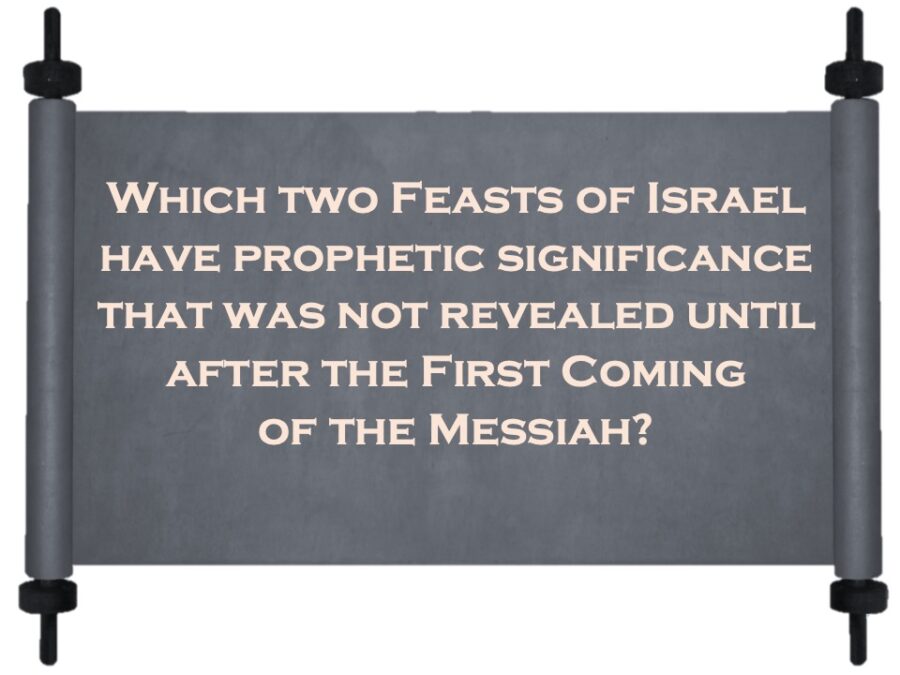
A. Passover and Sukkot
B. Shavuot (Pentecost) and the Feast of Trumpets
C. Unleavened Bread and Passover
B is the correct answer.
Shavuot (Pentecost) prophetically points to the formation of the Body of Messiah, which took place after the Messiah’s death (Passover and Unleavened Bread) and His resurrection (Firstfruits). The Church itself was a “mystery” in that it had not previously been revealed in its fullness (Ephesians 3:4–6, 9). Its formation and the inclusion of Jews and Gentiles together in one Body were revealed in the New Testament.
The Feast of Trumpets prophetically points toward the first resurrection and the rapture of believers. Paul describes this event as a mystery: “Behold, I tell you a mystery; we will not all sleep, but we will all be changed, in a moment, in the twinkling of an eye, at the last trumpet.” 1 Corinthians 15:51–52
Therefore, these two feasts point to truths that could not have been fully understood from the Hebrew Scriptures alone, since their New Testament fulfillment involved previously unrevealed mysteries. In Rabbinic Judaism, both Shavuot and the Feast of Trumpets took on many additional meanings and traditions beyond what is explicitly stated in the Torah. Because the prophetic aspect of these two feasts was somewhat shrouded, it gave rabbis and commentators plenty of room for interpretation and, at times, poetic license.